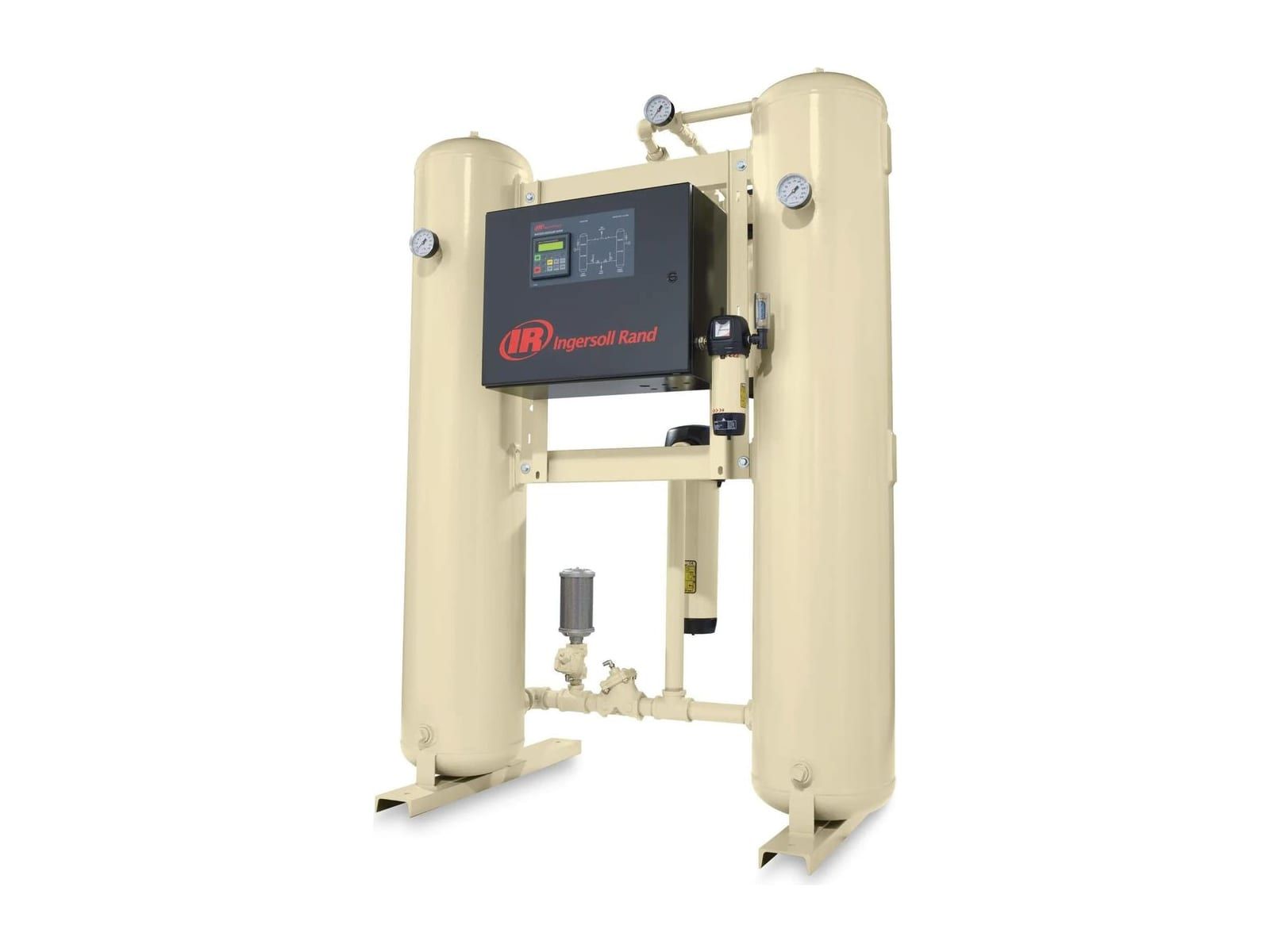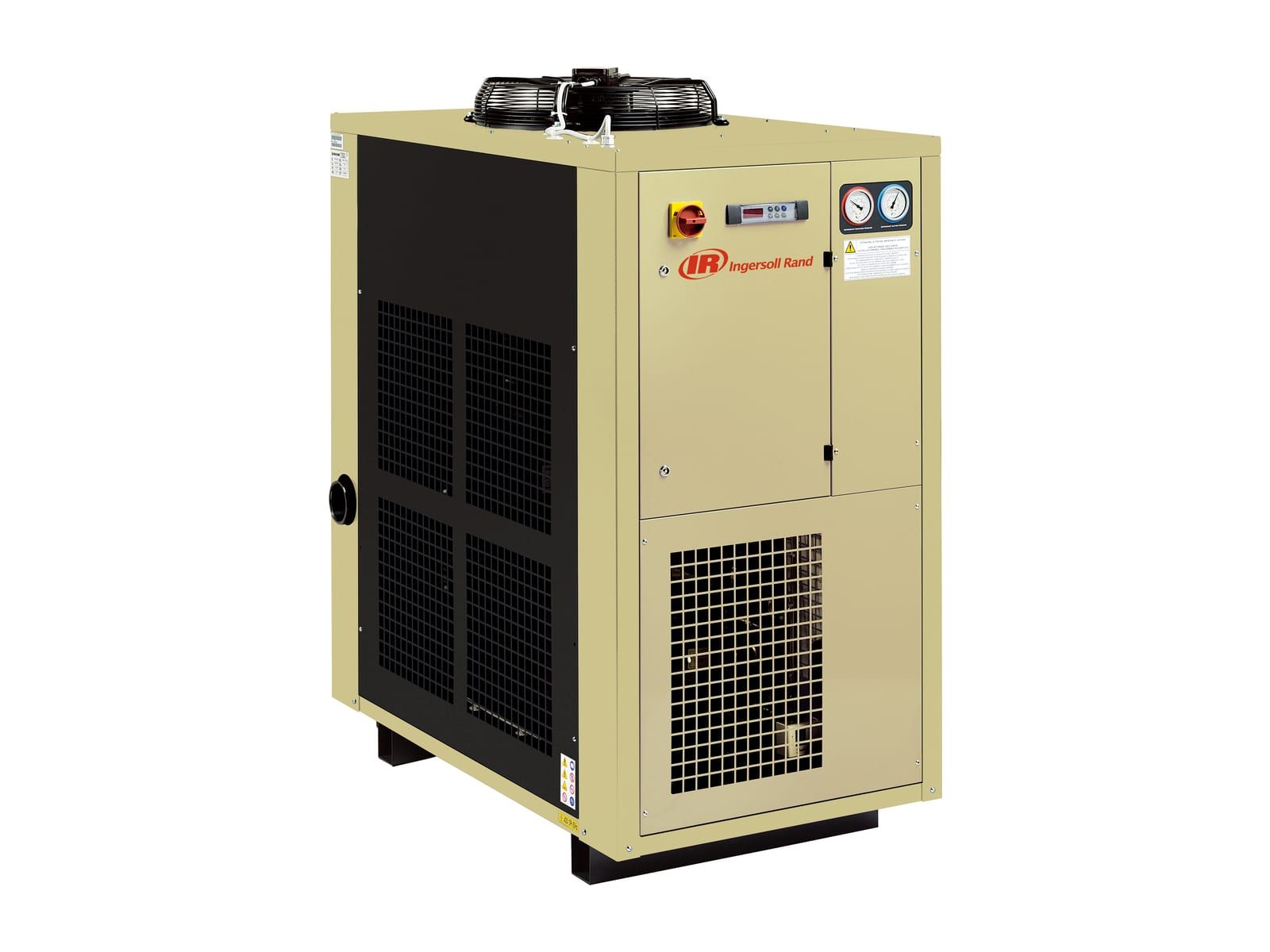
Refrigerated compressed air dryers
Refrigerated dryers that cool compressed air to condense out water, for general plant air at the lowest running cost.
Products · Ingersoll Rand / Nexus
A compressed air dryer removes the water vapour that a compressor pushes into the system, and it is the heart of air treatment. Nexus Turnkey designs the full treatment train around the ISO 8573-1 class each user actually needs: aftercooler and separator, refrigerated or desiccant dryer, particulate, coalescing and carbon filters, receivers, zero-loss drains and oil-water separation. We correct every capacity to tropical inlet and ambient temperatures, then deliver the air through a ring main designed for low pressure drop.
How to choose
| What the air is used for | Typical treatment | ISO 8573-1 target (water) | Notes |
|---|---|---|---|
| General plant air, tools, blow-off indoors | Refrigerated dryer plus general-purpose filtration | Class 4 (pressure dew point ≤ +3 °C) or Class 5 | Lowest running cost; correct for site temperature |
| Instrument air, painting, packaging lines | Refrigerated dryer with coalescing filtration, or desiccant where pipes run cool | Class 4, or Class 2 to 3 where needed | Set by the most sensitive user, not the average |
| Air that touches food, drink or medicine | Desiccant or refrigerated dryer, coalescing and activated-carbon stages | Set by your risk assessment | Oil class matters as much as water class |
| Lines exposed to cold, or very dry processes | Desiccant (adsorption) dryer | Class 2 (≤ -40 °C) or Class 1 (≤ -70 °C) | Purge or heat energy is part of the running cost |
| Mixed users on one site | Plant-wide base treatment plus point-of-use stages | Different classes per branch | Avoids drying the whole plant to the strictest class |
Families
Refrigerated dryers that cool compressed air to condense out water, for general plant air at the lowest running cost.
Compressed air distribution designed for low pressure drop: headers, ring mains, drops, isolation and machine connections.
Twin-tower desiccant dryers for low pressure dew points, for sensitive processes and air lines exposed to cold.
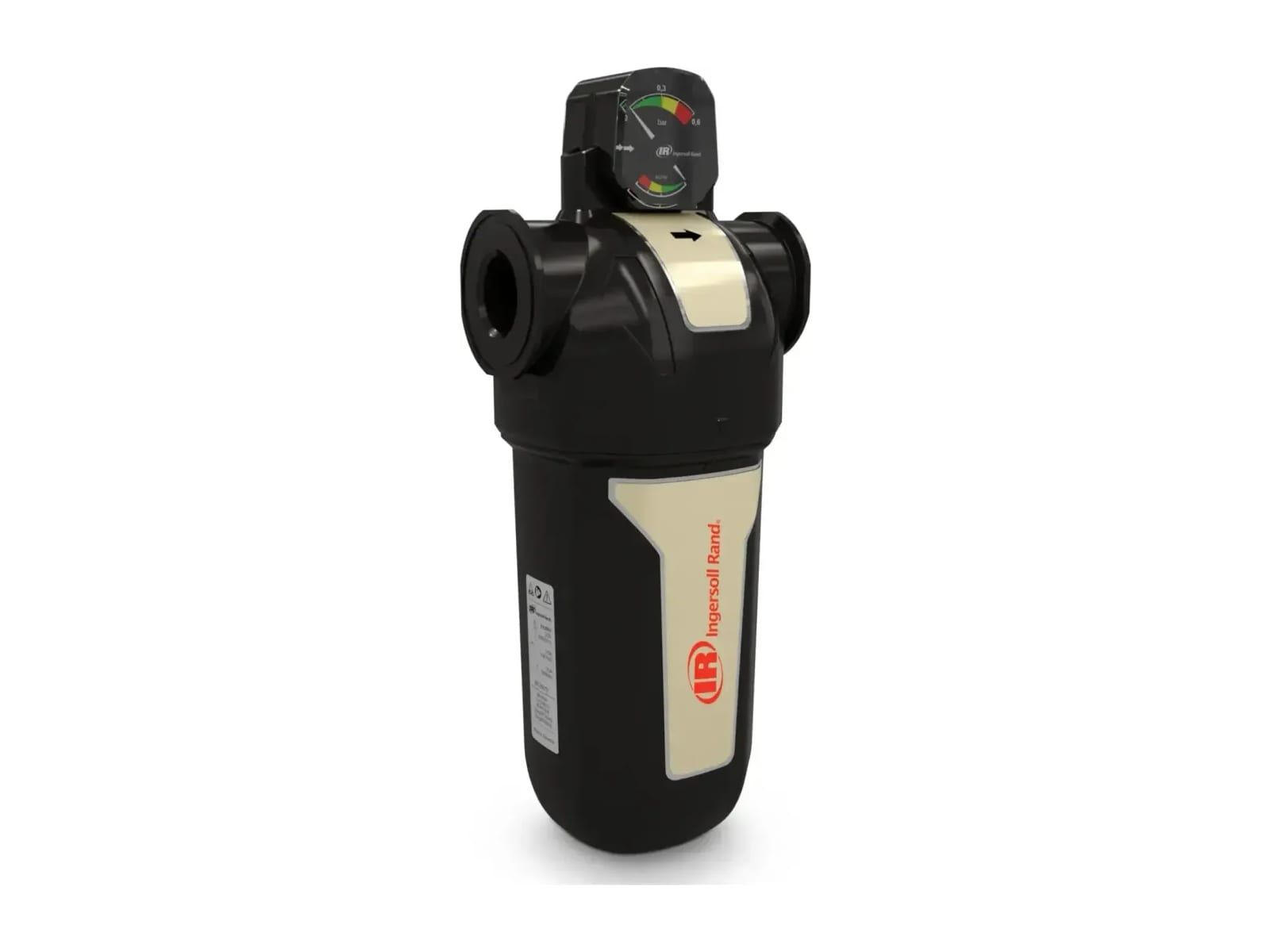
Particulate, coalescing and activated-carbon line filters, staged to reach the ISO 8573-1 particle and oil class each user needs.
Aftercoolers that cool hot discharge air so most of its water condenses, and separators that remove that water before the dryer.
Rated air receivers with safety accessories that store air for peaks, steady the pressure and reduce compressor cycling.
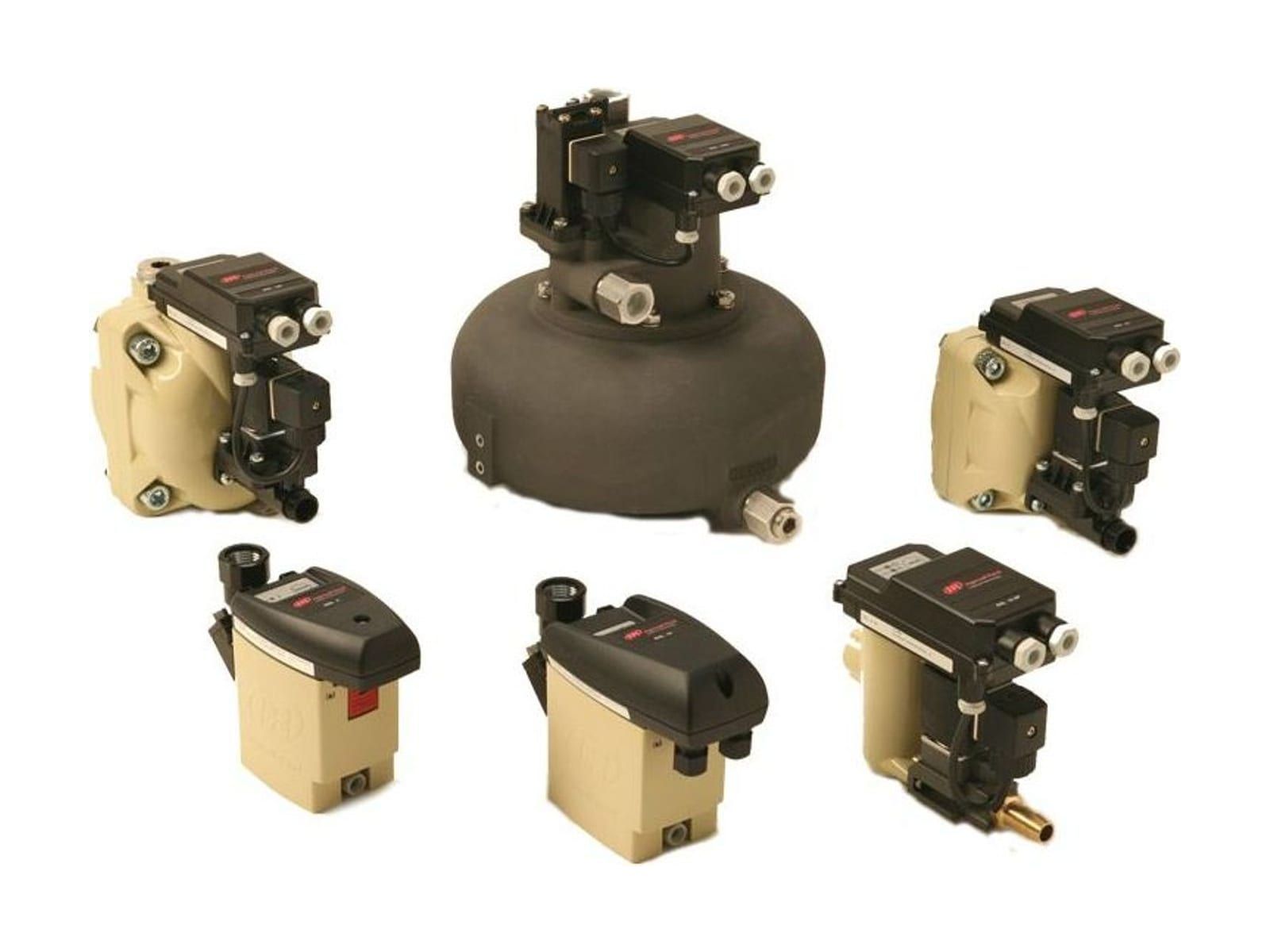
Zero-loss and electronic condensate drains that remove water from receivers, dryers and filters without wasting compressed air.
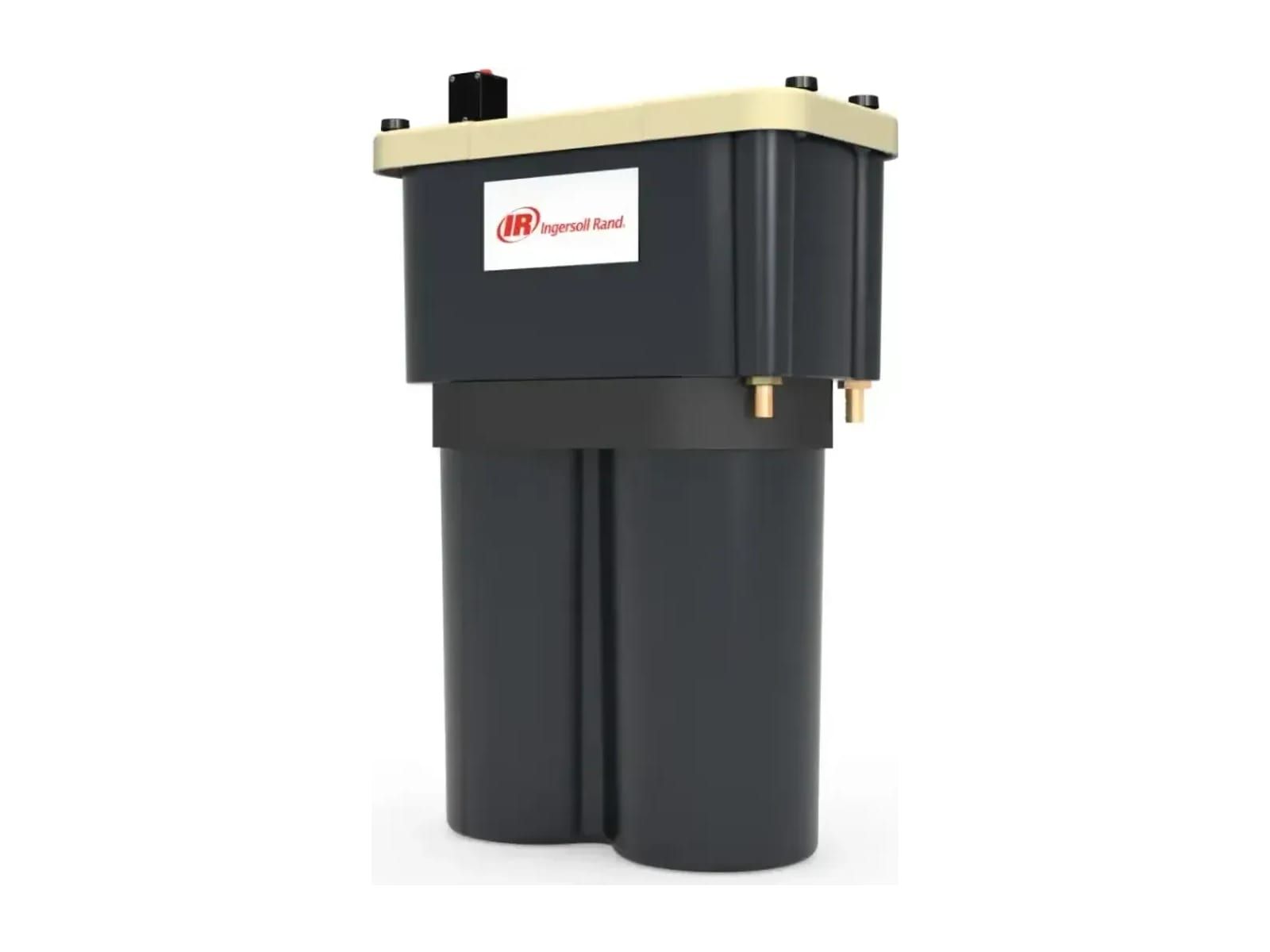
Oil-water separators that remove oil from compressor condensate so the water can be discharged responsibly.
Ranges are indicative. Confirm against the current manufacturer datasheet.
A compressor in a humid climate takes in a great deal of water vapour with every cubic metre of air. Compression concentrates it. Unless it is cooled out, separated, dried and drained, it ends up as liquid water in the pipework, then in valves, spray guns, instruments and product. Air treatment is the chain of equipment that stops that happening, and it only works as a chain.
Nexus Turnkey designs that chain from the compressor outlet to the last machine:
Start with the user, not the equipment. ISO 8573-1 classifies compressed air by particles, water and oil. Under ISO 8573-1:2010, a pressure dew point of +3 °C or lower is water Class 4. Class 2 is -40 °C or lower. Class 1 is -70 °C or lower. Write down the class each group of users needs, and the table above points to the treatment that delivers it. Our ISO 8573-1 class explorer shows what each class means in practice.
Two rules keep the design economical. First, treat the plant to the class most users need and add point-of-use stages for the few that need more. Second, size for the conditions on the hottest day, not the brochure’s reference conditions. Our article on refrigerated vs desiccant dryers walks through the decision in detail.
Dryer and filter capacities are published at reference inlet and ambient temperatures. A compressor room in the hot season often runs well above them, so a dryer that looks right on paper can be undersized in practice and pass water downstream. We apply the manufacturer’s correction factors for inlet temperature, ambient temperature and pressure before choosing a size, and we place dryers where they get cool air.
Condensate volume is also high in humid weather. Drains have to cope with it, and the oily water they discharge has to be treated before it goes to drain. Timer drains that blow air every few minutes waste energy all year. We specify zero-loss drains and size an oil-water separator for the real condensate load.
Pressure lost in undersized or dead-end pipework is made up at the compressor, and raising the setpoint costs energy. The US Department of Energy’s rule of thumb is roughly 1 % of compressor energy for every 2 psi of extra discharge pressure in the typical 100 psig range. We design ring mains with take-offs from the top of the header, slopes and drain points, isolation valves for maintenance, and connections sized for the machines at the end of each drop. In live plants we re-pipe in phases so production keeps running. You can estimate what pressure reduction is worth with our pressure reduction savings tool.
We supply treatment equipment from the brands we represent and engineer the distribution as part of the system. Ask us which series are currently supplied in Cambodia. We install, verify the dew point and pressure drop at commissioning, and support the train with planned element changes, drain checks and leak detection. Savings are project-specific. We measure them against a baseline and verify them after implementation; we don’t promise a blanket percentage.
FAQ
A refrigerated dryer is the economical choice when a pressure dew point of about +3 °C (ISO 8573-1 Class 4) is enough and no air line runs colder than that. A desiccant dryer is needed when you need a much lower dew point, for example Class 2 at -40 °C, or when pipes pass through cold areas. Desiccant dryers cost more to run because they use purge air or heat to regenerate.
Usually one of four things: the dryer is undersized for hot inlet air and ambient, a drain has failed, the dryer is bypassed, or condensate is already sitting in a dead-end pipe downstream. We check the dryer against corrected capacity, test drains and look at the piping before recommending new equipment.
A ring main is a closed loop of distribution pipe. Air reaches each drop from two directions, so pressure drop at the far end is lower and a section can be isolated for work without shutting down the rest. Dead-end headers are cheaper to install but tend to lose pressure at the furthest machines.
Yes, and it is often the cheaper design. Treat the whole plant to the class most users need, then add point-of-use dryers or filters for the few users that need more.
Every filter adds pressure drop, and pressure drop has to be made up by the compressor. Size filters for low pressure drop, fit differential-pressure indication, and change elements on condition and schedule. That keeps treatment from quietly raising the setpoint.
Next step
Send the dryer nameplate, the room temperature in the hot season and where the water appears. We will tell you what we would check first.