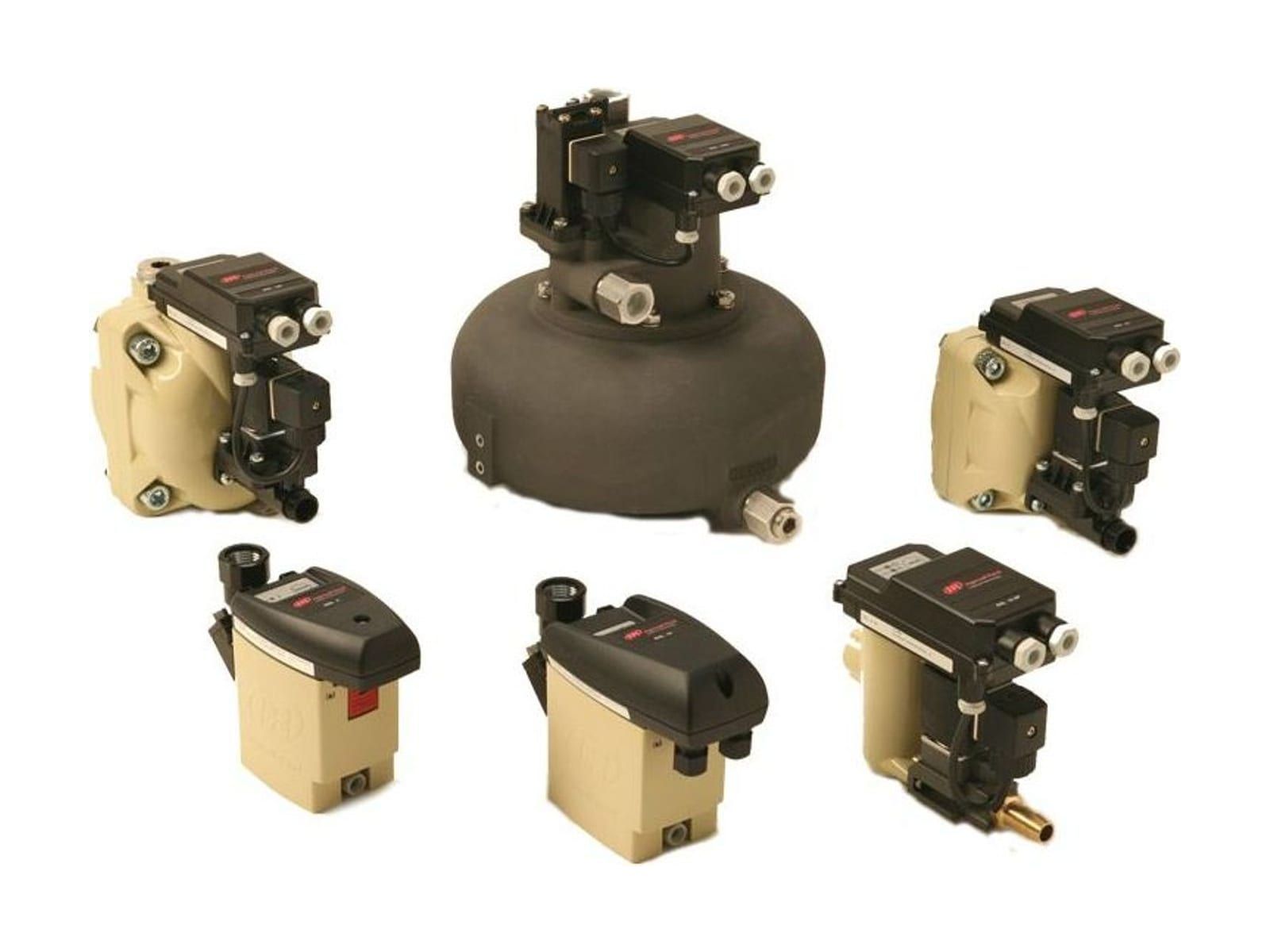
Drain the water, keep the air
Water collects wherever compressed air cools or slows down: separators, receivers, dryers, filter housings and low points in the pipework. If it is not removed, it is carried into the network. Old methods waste air: a manual valve left cracked open, or a timer drain that opens for a few seconds every few minutes whether there is water or not. A zero-loss drain senses the water level and opens only long enough to discharge it.
We supply condensate drains from the brands we represent. Ask us which series are currently supplied in Cambodia.
How it works
A zero-loss drain has a small reservoir with a level sensor. As condensate fills the reservoir, the sensor triggers a valve that opens until the level drops, then closes before air escapes. Many models raise an alarm if the valve fails to clear the reservoir, which is the moment a timer drain would silently start flooding the equipment above it.
Timer drains are cheaper to buy and still have a place on very small drain points. Every opening that discharges air instead of water is a small, permanent leak, so on most points the zero-loss drain is the better choice over its life.
Where it fits
- Compressor separators, receivers and drip legs.
- Refrigerated dryer separators, where a failed drain floods the dryer.
- Coalescing filter housings.
Selection notes
- Size for the condensate load. In Cambodia’s humid climate the volume of condensate is high, especially in the wet season. Drains must handle the peak, including the first stage after the compressor where most water collects.
- Install correctly. A drain needs a proper inlet line with a fall from the drain point and a strainer or ball valve for isolation. Poor installation is a common cause of failure.
- Treat the discharge. Condensate from oil-injected systems contains oil. Route it to an oil-water separator.
- Service it. Drains need periodic cleaning and service kits. A drain survey is part of every leak detection visit.
What Nexus provides
Drain survey, selection for each point, correct installation, and service kits and checks under planned maintenance.