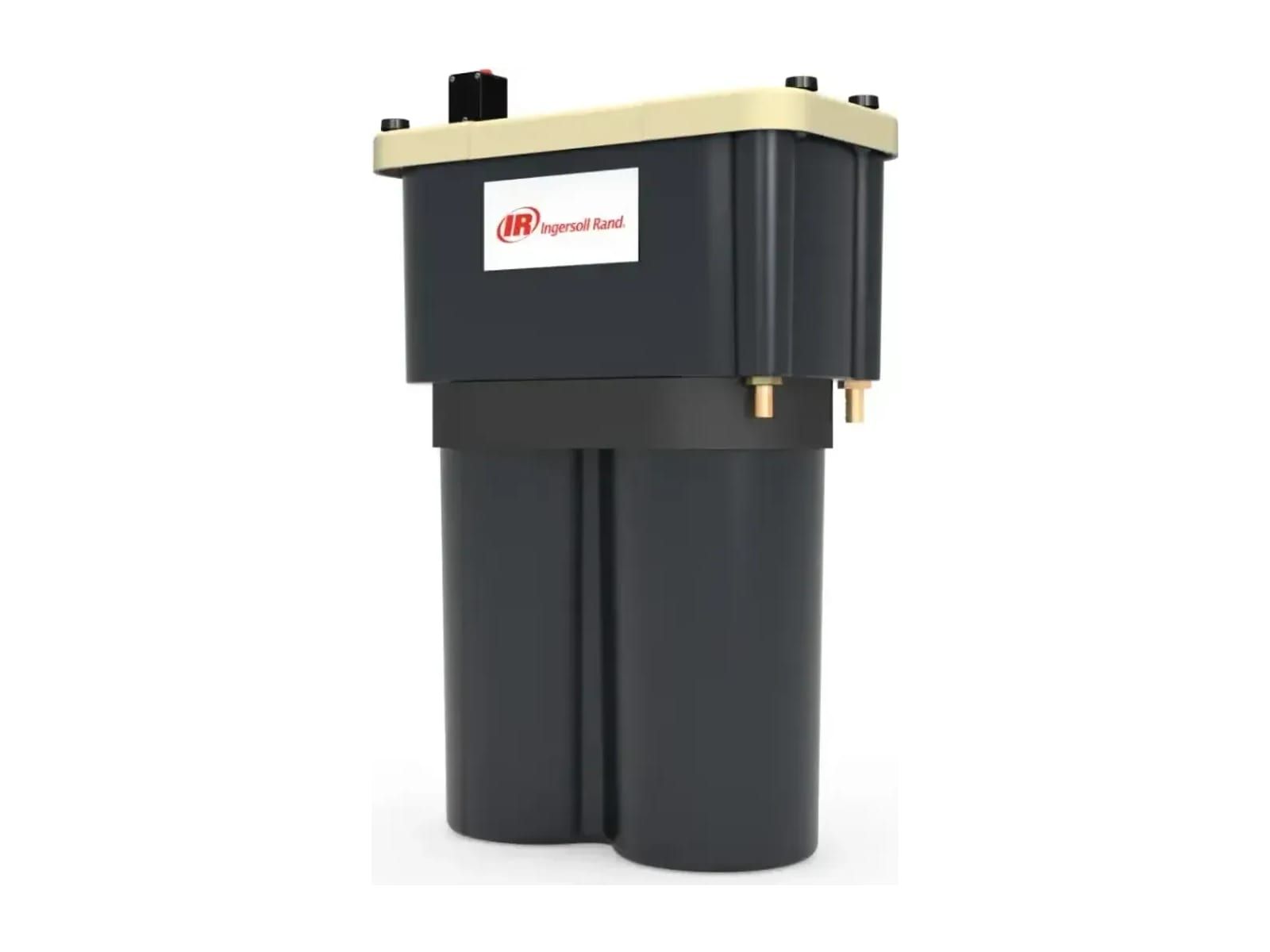
Condensate is oily water, and it needs treating
Condensate from an oil-injected compressor system is mostly water, but it carries oil picked up in the compressor and the network. Discharging it straight to a drain sends that oil into the site’s wastewater. An oil-water separator removes the oil so the water can be discharged responsibly and the oil collected for proper disposal.
We supply oil-water separators from the brands we represent. Ask us which series are currently supplied in Cambodia.
How it works
Condensate from the drains enters an expansion chamber that releases any air under pressure without disturbing the liquid. Free oil floats and is skimmed off into a collection container. The remaining water then passes through adsorption media, often oleophilic filters and activated carbon, which capture dispersed and emulsified oil. Treated water leaves through an outlet with a test point so its quality can be checked.
Where it fits
- Every compressor room with oil-injected compressors.
- Sites where customers or auditors inspect environmental management.
- Plants that want to show their condensate is handled properly.
Oil-free compressors produce condensate with much less oil from the compressor itself, though it can still pick up contaminants from intake air.
Selection notes
- Size for the real condensate load. Humid air produces a lot of condensate. Size from compressor capacity and site conditions, including the wet season peak, using the manufacturer’s sizing data.
- Check the lubricant. Some lubricants form stable emulsions that standard separators cannot split. Confirm compatibility with the oil used in your compressors.
- Route every drain. Collect condensate from compressors, dryers, receivers and filters into one header to the separator, with falls and no low points.
- Replace media on time. Saturated media pass oil through. Change it on schedule and check the outlet.
Local discharge rules apply to the treated water. We design the system to work with your site’s wastewater arrangement, and your EHS team confirms the discharge requirements that apply.
What Nexus provides
Condensate system design from drain points to discharge, separator sizing, installation, and media replacement and outlet checks under planned maintenance.