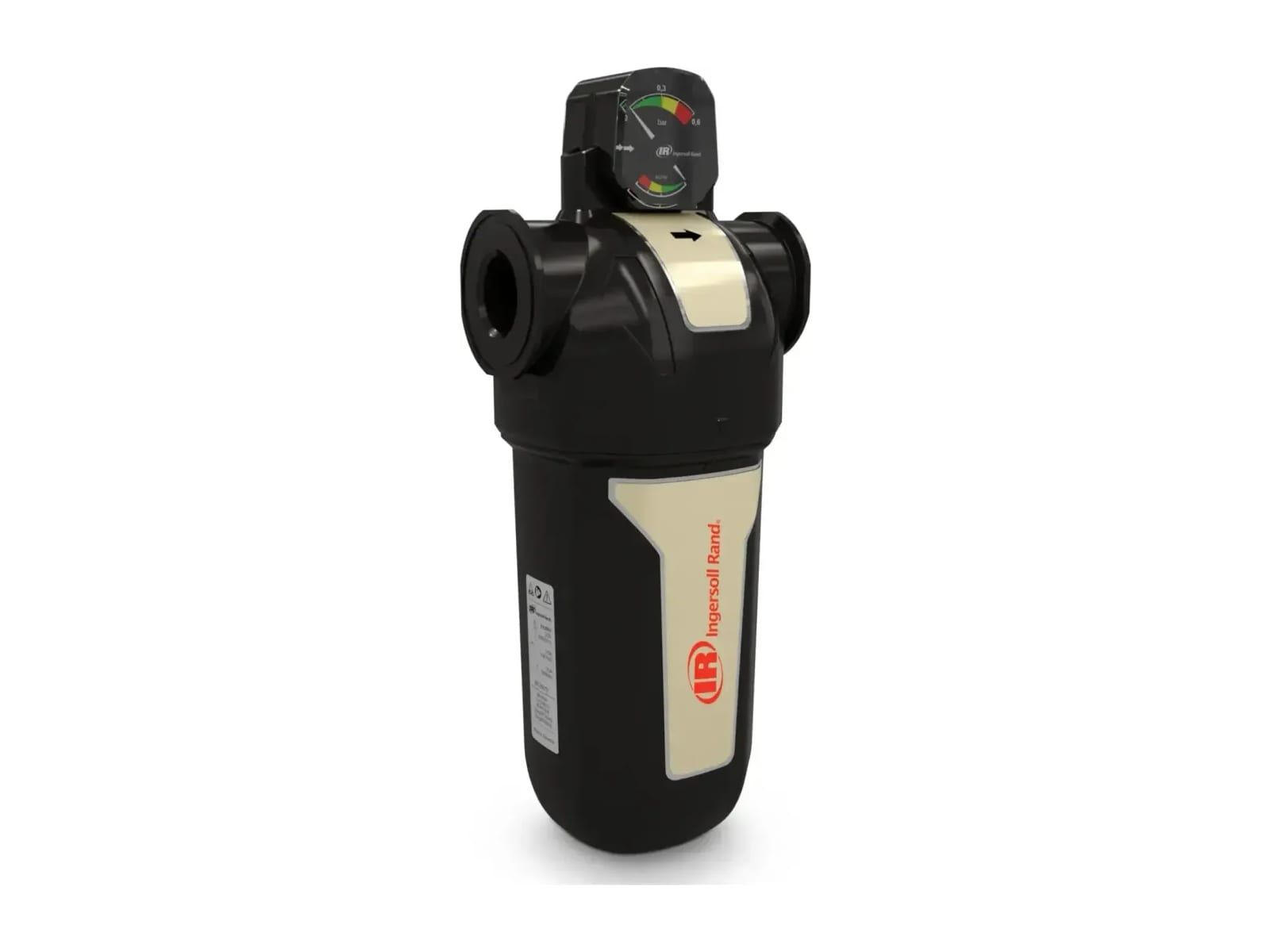
Each filter stage removes a different contaminant
Compressed air carries three kinds of contaminant: solid particles, water and oil. A dryer deals with water vapour. Filters deal with the rest, and each type is designed for a different job:
- Particulate filters capture dust, rust, pipe scale and desiccant fines.
- Coalescing filters capture fine oil and water aerosols. Droplets merge in the filter medium, grow, and drain away.
- Activated-carbon filters adsorb oil vapour and odours that pass through a coalescer as gas.
We supply compressed air filters from the brands we represent. Ask us which series are currently supplied in Cambodia.
How a filter train is built
Filters are arranged in stages, from coarse to fine, each protecting the next. A typical train for plant air is a general-purpose coalescing filter before or after the dryer, then a high-efficiency coalescer. Where oil vapour matters, an activated-carbon stage follows, always downstream of a coalescer, because liquid oil would quickly saturate the carbon. A particulate filter after a desiccant dryer catches desiccant dust.
The target is set by ISO 8573-1, which classifies air by particles, water and oil. Under ISO 8573-1:2010, total oil Class 1 is ≤ 0.01 mg/m³ and Class 2 is ≤ 0.1 mg/m³. The filter manufacturer’s test data shows which class each stage is designed to deliver at stated conditions.
Where it fits
- After every dryer, to protect the network and users.
- Ahead of desiccant dryers and nitrogen generators, to protect the media.
- At the point of use, for users that need a stricter class than the plant network.
Selection notes
- Size for pressure drop, not just pipe size. A filter sized only by its connection can run near its maximum flow with a high pressure drop. Every 0.1 bar matters at the compressor.
- Change on condition and schedule. Differential-pressure indication shows loading. Coalescing elements are changed on schedule even if pressure drop looks fine, because efficiency can fall before pressure drop rises.
- Drain the coalescers. A coalescing filter without a working drain floods and carries liquid downstream.
- Match the element to the housing. An element that does not seal lets air bypass it.
What Nexus provides
Class specification by user group, filter train design, installation, element supply on a planned schedule, and checks of drains and pressure drop during maintenance visits.