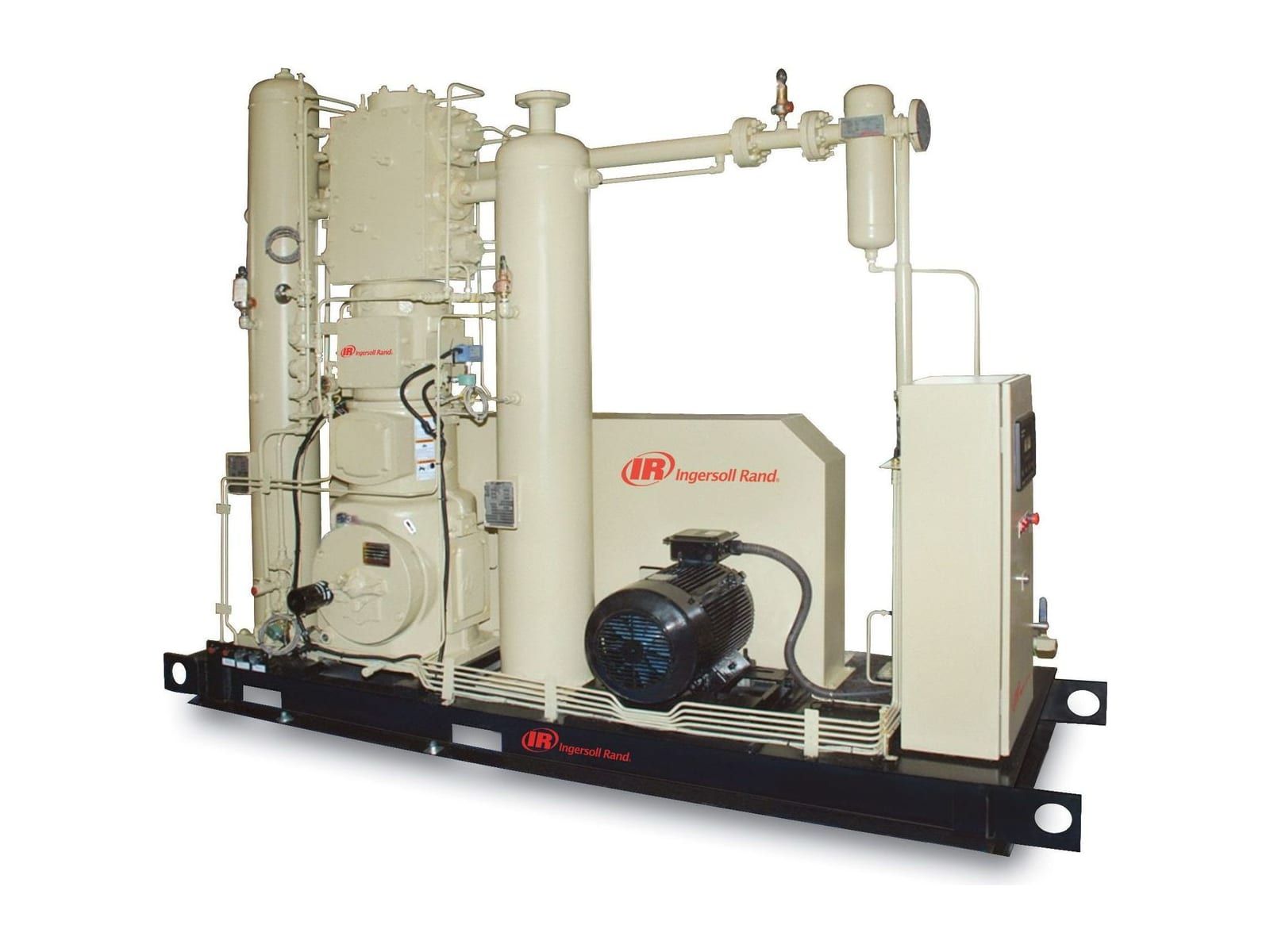
Don’t run the whole plant at one user’s pressure
When one process needs higher pressure than the rest of the plant, the easy answer is to raise the main compressor setpoint. It is also the expensive one. Every machine on the network then runs at the higher pressure, leaks get worse, and the US Department of Energy’s rule of thumb puts the cost at roughly 1 % of compressor energy for every 2 psi of extra pressure in the typical 100 psig range. A dedicated high-pressure system or a booster serves the one user at the pressure it needs and leaves the rest of the plant at the lowest stable pressure.
We configure high-pressure and booster packages around the duty, using equipment from the brands we represent. Ask us which series are currently supplied in Cambodia.
How it works
There are two common arrangements:
- Dedicated high-pressure compressor. A separate compressor draws atmospheric air and compresses it to the high pressure in multiple stages, with its own receiver and treatment.
- Booster. A booster takes air that is already compressed and treated at plant pressure and raises it further for one user. Because the inlet is already pressurised, the booster does less work than a machine starting from atmosphere, and the plant compressors carry the first part of the job.
Either way, everything downstream of the high-pressure stage, from receivers and dryers to pipework and valves, must be rated for that pressure.
Where it fits
- PET blow moulding, which needs high-pressure air for blowing alongside lower-pressure air for the rest of the line.
- Pressure and leak testing of components and vessels.
- Specialist users within an otherwise low-pressure plant.
Selection notes
- Separate the networks. Map which users really need high pressure. Often it is one or two machines.
- Air quality. PET blowing and similar processes are sensitive to oil and water. Treatment has to be specified for the high-pressure stage, not borrowed from the plant network.
- Safety. Pressure-rated receivers, relief valves and pipework, documented and inspected.
- Recovery. On some blow-moulding lines, part of the high-pressure air can be recovered into the low-pressure network. We look at this case by case.
What Nexus provides
Network mapping, package design, pressure-rated installation, commissioning and maintenance. Savings are project-specific. We measure them against a baseline and verify them after implementation; we don’t promise a blanket percentage.